Planning a road trip with an EV
With warmer weather, lighter nights, and a summer of road trips ahead of us, now’s the perfect time to start preparing for your next adventure with your electric vehicle.
Between mapping charging spots and servicing your car to packing the essentials, we’ll cover everything you need to note before heading out on the open road for successful motoring.
1. Map your route and charging stops
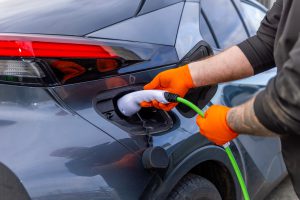
As with any road trip, planning your route is important to get the most out of your miles. Plotting charging stops along your way, as you would with petrol stations, is vital to avoid running out of charge when you’re hours away from being recovered.
There are now more electric vehicle public chargers than there are fuel pumps in the UK, which means long journeys in your electric car are easier than ever. However, it’s still a sensible idea to note your next charger’s location in advance, as well as a backup in case of a fault when you arrive.
With the help of a sat nav, you can access live traffic updates, environmental zone routing, and your closest EV charger to make preparation easier. The Garmin Drivesmart 66 EU Sat Nav provides such features, as well as:
- Voice assistance to easily find where you need to be.
- Lifetime EU maps.
- Speed camera updates.
- Tripadvisor reviews so that you know where’s best to pull over and explore.

2. Choose your charging stations carefully
Not all EV chargers are designed equally and some can be quite a lot slower.
- Slow chargers (3kW) can take up to 10-14 hours for a full charge; you’ll need to stop overnight to use these properly.
- Fast chargers (7kW – 22kW) usually take 4-6 hours for a full charge; a good option if you’re stopping off somewhere for the day to explore.
- Rapid chargers (50kW+) are able to charge your EV to about 80% in just 30-40 minutes, better for those mid-journey stops when you’ll be waiting in the toilet or food queues anyway.
- Ultra-rapid chargers (150kW+) charge your EV to around 80% in as little as 20 minutes.
Ultra-rapid EV chargers are the ideal stations to look for when you want to get some miles under your belt before stopping properly. They can be found at motorway services and dedicated hubs.
Regardless of the charger you use, additional conditions can slow down your charging speed:
- Larger batteries.
- Colder weather.
- AC chargers – they’re typically slower than DC chargers.
- Your vehicle’s maximum charging capacity – incompatibility with the faster charger’s output.
3. Account for EV range and charging time
Most EVs have an average range of 239 miles, with some models even reaching over 400 miles before they need another charge. That average is enough to get you from Plymouth to Birmingham, with 38 miles to spare!
However, that’s not the case for every model of EV, as some, like the Dacia Spring and the Fiat 500e hatchback, have a range of less than 100 miles. So, inspect your vehicle manufacturer’s handbook carefully, and plan stops based on your vehicle’s range and charging time.
It can be a good idea to reduce the advertised range by 10% so that you know you’ll absolutely reach your charging point. For example, EV range can drop under certain conditions:
- Too hot or cold weather.
- Driving at maximum motorway speeds.
4. Optimise your stops
When you do come to charge up, consider taking multiple short stops rather than one long one. This is ideal if you have kids or dogs who may need bathroom breaks and time to stretch their legs.
Draining your EV battery down to nothing can take much longer to refuel. Besides, road trips are designed to give you places to stop at – it’s part of the fun! So, charge your EV smartly and plan the stops around you, rather than see it as a hindrance.
If it takes your car quite a while to charge, pick stops that offer places to grab a bite to eat or seating. It can be much more pleasant to relax or stretch your legs in a different environment than to sit in your car before starting another long drive.
It’ll feel most natural to charge your EV when you stop to:
- Eat.
- Use the restrooms.
- Stay at hotels overnight.
- Explore local areas.
- Sightsee.
5. Arrange payment in advance
And of course, with regular pit stops, remember to set up your payment methods before you leave home.
If you lose your phone or your bag gets stolen, you may struggle to paying for your car, snacks, or essentials, so bring multiple payment methods in advance, as rural areas may pose connectivity issues if you need to access your bank account.
6. Prepare your EV
Before heading out on a long adventure, it’s essential that you check your vehicle is ready to support you for the long haul.

With Halfords EV Servicing, we can perform a 70-point inspection and carry out almost all required work on-site and the same day for convenience. Visit your local Halfords garage where our EV-trained technicians will complete a range of vital checks during your Full EV Service, including:
- A coolant top-up.
- Brakes, steering, gear selector, air-con checks, and many more.
- Connect diagnostic for EV health check and report live data, worth £49.99.
Or upgrade to a 24-month Major EV Service to also cover:
- Cabin filter replacement, worth up to £60.
- Brake fluid replacement, for conventional braking systems, worth up to £49.99.
- Sunroof function check.
- Wheel balance inspection – and so much more!
Don’t forget you can save up to 50% off your MOT when you book it with a service, saving you time and money for safety in one easy visit.
Or join Halfords Motoring Club Premium for 5% off your every motoring product and service – a huge benefit alongside an included MOT, and 2 x 10-point car safety checks!
Road trip essentials
When you’re setting out on a road trip, there are some pieces of kit that everyone should bring, as well as EV-specifics. For reliability, comfort, and safety, take a look at the important essentials to bring along for the long haul.
1. EV chargers and cables
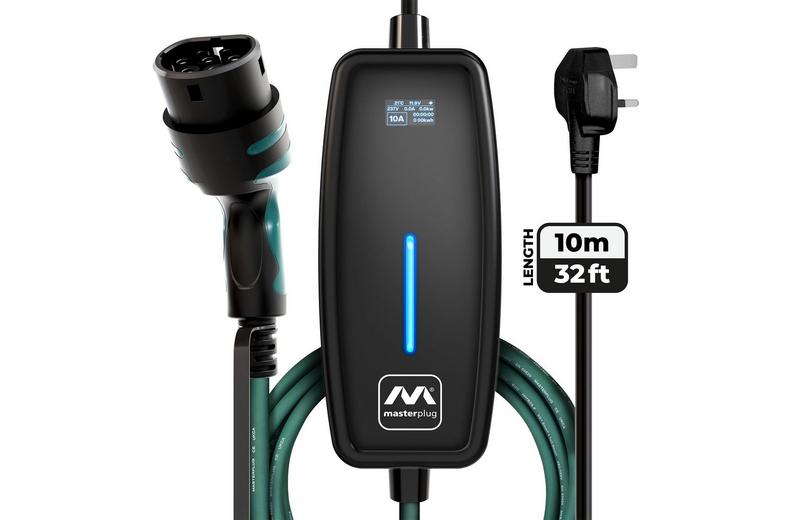
Although public chargers should support you in most cases, some don’t have built-in cables, which can easily leave you stuck miles from home. Consider picking up your own EV charger so that you’re always covered.
The Masterplug Mode 2 EV Charge Cable offers premium features with its LCD charging status display and integrated safety protection, universally compatible with all Type 2 electric and hybrid vehicles.
2. Tyre inflators
Although tyre pressure is vital for safety in every vehicle, in EVs, it also impacts vehicle range.
As EVs are heavier, tyres matter even more and low pressure can create a noticeable range drop in your car, meaning you’ll need to recharge more frequently.
The impact of under-inflated tyres includes:
- Compromised road safety and an increased risk of punctures or blowouts.
- Decreased handling and braking, creating a larger stopping distance.
- Reduced traction and road grip.
- Accelerated and uneven tyre wear.
To prevent the consequences of under-inflated tyres, check your tyre pressure regularly with a tyre inflator and always before long journeys. The Halfords Rapid Digital Tyre Inflator can fully inflate your tyre in just 2 minutes and uses an automatic cut-off feature to prevent over-inflation.

3. Jump starters
Surprisingly, EVs do still have a use for jump starters, and they’re actually very useful if your EV refuses to charge.
An electric car has 2 batteries:
- A high-voltage battery that allows your car to drive.
- A separate 12-volt battery that powers up systems like lights, infotainment, and other electrics.
Although jump-starting the 12-volt battery won’t provide an EV with more power, if it’s the 12-volt battery that’s preventing the main battery from charging, a jump start is the first step to fully powering up your vehicle.
It’s useful to know that you can jump-start a petrol car with your EV, and vice versa, a petrol car can recharge your 12-volt battery. However, if your EV (the main battery) is completely drained, a jump start won’t help.
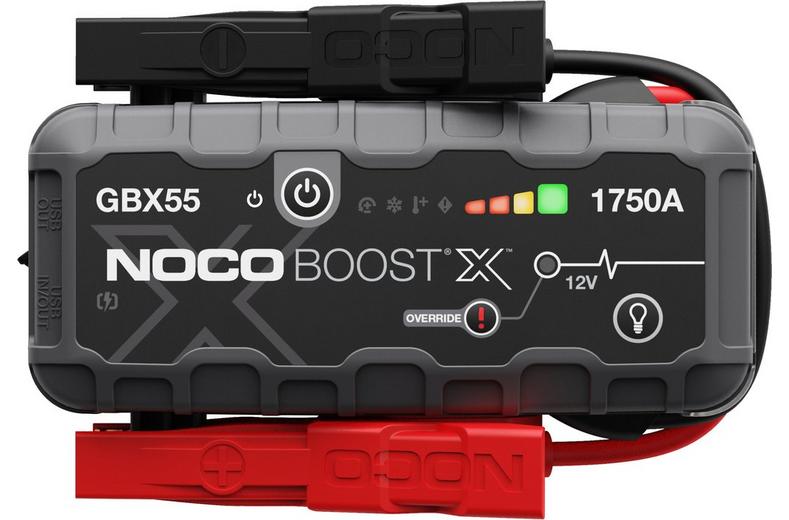
If you’re travelling with others in petrol cars or want to maintain the electrical components in your EV, picking up a 12V jump starter is a great, proactive step.
The NOCO Boost X GBX55 1750A 12V Jump Starter is a compact and ultra-safe battery booster, which also includes USB-C connectivity and a 200-lumen LED flashlight for visibility in the dark.
Other road trip essentials include phone chargers, cool boxes, bike racks, roof boxes, and much more, depending on what your plans are. Stay prepared for anything, and ensure a summer of fun, stress-free adventures with your EV!
For even more advice on what to bring along for a long-distance drive, take a look at our complete road trip checklist.
With all of these helpful tips to consider before you get behind your EV’s wheel, you’re bound to enjoy a successful and safe road trip, wherever you’re heading.
For all of your motoring needs, visit Halfords online or head to your local garage for more expert support.