Charging an Electric Vehicle at Home: Is It Safe?
As more people switch to electric vehicles, home charging is becoming a common aspect of everyday driving. Home charging is convenient, but many drivers still ask whether it is safe.
The short answer is yes – charging an electric vehicle at home is safe when you use the correct equipment.
Is it safe to charge an EV at home?
Charging an electric vehicle at home is safe when using a dedicated home charging setup.
Some e-vehicles include a 3-pin plug charger, which allows charging from a standard household socket. However:
- Charging is much slower than with a dedicated charge point.
- They’re generally only suitable for emergencies.
Avoid extension leads
Extension leads should not be used for EV charging. As electric vehicle charging requires a lot more power than most household appliances, domestic extension leads are not designed to withstand higher loads.
Using an extension lead to charge an EV increases the risk of:
- Overheating.
- Electric shock.
- Electrical fire.
A dedicated charge point is the safest way to charge at home since it’s designed to handle the power needed by an EV and is installed by professionals.
Why a dedicated home charger is safer
Home EV charge points are designed especially for EV charging. They’re installed professionally and built to manage the power requirements safely.
Benefits of a dedicated home EV charger:
- Correct electrical protection.
- Stable power delivery.
- Safer long-duration charging
- Dynamic load balancing – your charger will adjust how much power it draws depending on how much power is being used in your home.
Installation and safety standards
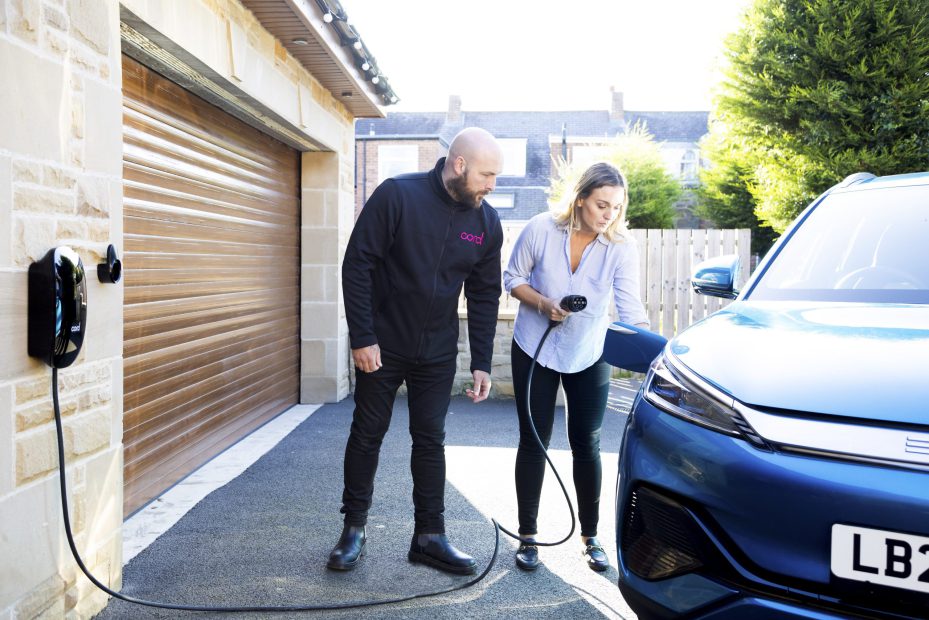
Our partners Cord handle all our installations and ensure every charger is safely fitted in line with the UK Smart Charging Regulations. The chargers themselves also undergo rigorous testing to ensure they meet similar safety standards, so you can rely on a safe and secure connection any time you charge.
Cord EV chargers also automatically turn off once your car’s full, so you don’t need to worry about overcharging.
How does home charging work?
A home charger works similarly to a public chargepoint. It consists of a compact, weather-resistant charging unit installed outside your home.
It is usually fitted to:
- An exterior wall.
- A driveway location.
- A parking area close to the vehicle.
This allows easy and convenient access whenever you need to charge your ride up!
Can home charging save money?
Home charging is significantly cheaper than using a public charger. In some cases, home charging can cost up to 5 times less, depending on electricity tariffs and charger type.
Reasons for cheaper home charging include:
- Home electricity for domestic use is charged at 5% VAT.
- Meanwhile, many public chargers are subject to standard 20% VAT.
- With a home charge point, you can take advantage of deals like off-peak energy tariffs, which makes it cheaper as fewer people are drawing power.
For more info, you can check out our guide to EV charging.