Driving tired is one of the most underestimated risks on the road, and summer is when the danger rises sharply. National Highways data shows that fatigue‑related deaths and serious injuries increase significantly during the summer months compared with the rest of the year.
Fatigue doesn’t just mean falling asleep. National Highways warns that tiredness slows reaction times, clouds judgement and can lead to dangerous mistakes, especially on long journeys in warm weather.
Why fatigue increases in summer
Summer brings longer trips outside of our usual routines whether it’s a journey to the airport or a family road trip. Early starts, late finishes and hotter conditions – all of which make drivers more vulnerable to tiredness. National Highways’ research highlights:
- Only 42% of UK driving licence holders plan rest stops before a long journey
- Only 55% ensure they are well-rested before long journeys
- In 2024, 20% of fatal and serious injury collisions where driver fatigue was identified as a contributory factor occurred in July and August, with 41% taking place between May and August.
With 60% of travellers admitting to taking long journeys outside their normal hours and many not factoring in rest breaks, the risk of fatigue‑related incidents rises significantly.
The National Highways T.R.I.P. campaign
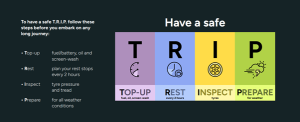
To help reduce fatigue‑related crashes, National Highways launched the TRIP campaign, encouraging drivers to prepare properly before long journeys. TRIP stands for:
- T is for Top‑up
- R is for Rest
- I is for Inspect
- P is for Prepare
The R = Rest message is especially important in summer. National Highways recommends:
- Taking a 15‑minute break every two hours of driving
- Planning rest stops before setting off
- Avoiding driving between midnight and 6am, when fatigue peaks
Rest stops aren’t just a quick dash to the motorway services – National Highways encourages drivers to make them meaningful. Stretch your legs, get fresh air, hydrate, or even explore a nearby landmark to properly reset your concentration.
Below are each of the points in more detail:
How to spot the signs of fatigue
If you notice any of the following, it’s time to stop:
- Frequent yawning
- Difficulty focusing
- Heavy eyelids
- Drifting out of your lane
- Missing road signs or turns
These are early warnings that your concentration is slipping and that you’re at risk of making dangerous mistakes.
What to do if you feel tired while driving
Feeling tired at the wheel is dangerous, so it’s important to act as soon as you notice the signs. If you start to feel drowsy, follow these steps:
- Pull over safely at a motorway service area or another suitable rest stop
- Never stop on the motorway or hard shoulder unless it’s an emergency
- Take a short nap to help restore alertness
- Have a caffeinated drink to boost concentration
- Get some fresh air and stretch your legs before continuing your journey
Make sure you only continue driving once you feel fully awake and alert.
How to drive safe this summer
A safer journey starts with a well‑rested driver – and a well‑prepared car. Before you head off:
- Book a 10 Point Car Check to make sure your tyres, fluids and lights are road‑trip ready.
- Pick up hydration, snacks and sun protection to help you stay alert.
- Consider a Dash Cam for added peace of mind on long motorway stretches.
Summer is made for adventures – let’s help keep them running smoothly. By following National Highways’ TRIP guidance, especially the rest element, you’ll help protect yourself, your passengers and everyone else on the road.